20th C. British Masters: Howells, Vaughan Williams, and Holst

Program Notes

Ralph Vaughan Williams (1872–1958) wrote operas, ballets, chamber music, secular and religious vocal pieces, and orchestral compositions, including nine symphonies. Strongly influenced by music of the Tudor Period (1485–1603) and English folk song, his output marked a decisive break in British music from its German-dominated style of the 19th century.

Vaughan Williams was born to a well-to-do family with strong moral views and a progressive social outlook. Throughout his life he sought to be of service to his fellow citizens and believed in making music as available as possible to everybody. He wrote many works for amateur and student performance. He was musically a late developer, not finding his true voice until his late thirties. His studies in 1907–1908 with the French composer Maurice Ravel helped him clarify the textures of his music and free it from German influences.

Mass in G Minor

The Mass in G Minor was written in 1921. The composer dedicated the piece to Gustav Holst and the Whitsuntide Singers at Thaxted in north Essex, but it was first performed by the City of Birmingham Choir on 6 December 1922. Though the first performance was in a concert venue Vaughan Williams intended the Mass to be used in a liturgical setting

In the late nineteenth century, England had been dominated by the German-influenced composers Parry, Stanford, and Elgar, with the maverick Delius lurking on the sidelines. It was only really with Vaughan Williams that music began to speak with a radically different, quintessentially English voice, something which modern ears now take for granted. It could be argued that Vaughan Williams’s Mass in G Minor was the first substantial, unaccompanied setting to be written with a distinctly English voice since the time of William Byrd in the sixteenth century.

Richard Terry, the consummate musician-liturgist of his generation, was delighted with the new setting: “I’m quite sincere when I say that it is the work one has all along been waiting for. In your individual and modern idiom you have really captured the old liturgical spirit and atmosphere.”

This duality between the “modern idiom” and the “old liturgical spirit” lies at the heart of the composition’s success. It takes as its starting point the sound world of the sixteenth century with its modal writing and subtle imitation, a style which Vaughan Williams had already utilized in his Fantasia on a Theme by Thomas Tallis. The Mass seems to reach back to a long-forgotten world, yet it is not some atavistic exercise but new music, colored by Vaughan Williams’s love of rich harmonies and made more dramatic by the juxtaposition of sinuous Gregorian-like lines with blazing choral antiphony. These effects are achieved by a scoring very similar to the “Tallis Fantasia,’” which had so gripped concert-goers at the Three Choirs Festival over a decade earlier in 1910. Two four-part SATB choirs (string orchestras in the “Fantasia”) work in dialogue with a solo SATB quartet (solo strings) who provide more personal, impassioned comment.

Herbert Howells (1892–1983) was most famous for his large output of Anglican church music.  He was born in Lydney, Gloucestershire, where his father played the organ at the local Baptist church. Howells showed early musical promise, first deputizing for his father and then moving at the age of eleven to the local Anglican parish church as choirboy and unofficial deputy organist.

A formative experience for the young Howells was the premiere of Ralph Vaughan Williams's Fantasia on a Theme of Thomas Tallis. Howells liked to relate in later years how Vaughan Williams sat next to him for the remainder of the concert and shared his score of Edward Elgar's The Dream of Gerontius. Both Vaughan Williams and Tudor composers, including Thomas Tallis, profoundly influenced Howells's later work.

Requiem

In 1935 Howells’s son Michael died at the age of nine, a tragedy that inevitably cast an immense shadow over the composer’s life. Until quite recently it was thought that the Requiem was composed in response to Michael’s death, but we now know that Howells composed it in 1932 or 1933, originally intending it for the choir of King’s College, Cambridge. For some reason the music was never sent to King’s, and its existence remained unknown until its eventual publication in 1980, only three years before the composer’s own death.  After the tragic events of 1935, Howells increasingly associated the Requiem with his lost son, so much so that a few years later, when he was composing Hymnus Paradisi, a work specifically intended as Michael’s memorial, he used substantial parts of the earlier Requiem, re-scoring it for soloists, large chorus, and orchestra.

One of the earliest and most fundamental influences on Howells was Gloucester Cathedral, with its immense, vaulted spaces and glorious east window. Howells wrote of it as “a pillar of fire in my imagination.” He consciously set out to mirror these essentially architectural elements of spaciousness and luminosity in his music, and these characteristics can clearly be heard in the Requiem. Significantly, the main climax of the work occurs at the words “et lux perpetua luceat eis” (let light perpetual shine upon them)—a symbol of hope and comfort, confirmed in the closing pages by the final release of tension and the gradual transition to a simple, peaceful D major.

Take Him, Earth, for Cherishing 

On November 22, 1963, forty-six year old John Fitzgerald Kennedy, the United States thirty-fifth President, was assassinated in Dallas, Texas.  The first music performed in his memory may well have been at Boston’s Symphony Hall.  People who were at the Boston Symphony Orchestra’s Friday afternoon concert were given the shattering news by Erich Leinsdorf, who then conducted an impromptu performance of the Funeral March from Beethoven’s “Eroica” Symphony.

And not long after Kennedy's death, Herbert Howells was asked to write a piece for a joint Canadian-American Memorial Service.  The piece, “Take Him Earth for Cherishing,” was completed the following spring and was first performed November 22, 1964—the first anniversary of Kennedy’s death—by the Choir of the Cathedral of St. George from Kingston, Ontario, in Washington, D.C.’s National Gallery. 

Howells himself described his work: 

“I was asked to compose an a cappella work for the commemoration [of Kennedy]. The text was mine to choose, Biblical or other. Choice was settled when I recalled a poem by Prudentius (AD 348–413). I had already set it in its medieval Latin, years earlier, as a study for Hymnus Paradisi. But now I used none of that unpublished setting. Instead I turned to Helen Waddell’s faultless translation. .  . Here was the perfect text—the Prudentius ‘Hymnus Circa Exsequias Defuncti’. The motet is sung here as intended—wholly for unaccompanied voices. Formally it is roughly A-B-A; in texture variably 4- to 8-part. Tonality anchors (first and last) on B, but admits chromatic phases. . . . Finally, a near-funeral march tethered again to B, but in the more consoling major mode.”

Take Him Earth for Cherishing would then be performed at Howells’s own memorial service in St John’s College Chapel, Cambridge in May of 1983, nearly twenty years after it was first performed in memory of John Fitzgerald Kennedy.

Gustav Theodore Holst (1874–1934) was an English composer, arranger, and teacher. Best known for his orchestral suite The Planets, he composed many other works across a range of genres, although none achieved comparable success. His distinctive compositional style was the product of many influences, Wagner and Richard Strauss being most crucial early in his development. The subsequent inspiration of the English folk-song revival of the early 20th century and the example of composers such as Maurice Ravel, led Holst to develop and refine an individual style.

There were professional musicians in the previous three generations of Holst's family, and it was clear from his early years that he would follow the same calling. Unable to support himself by his compositions, he played the trombone professionally and later became a teacher—a great one, according to his colleague Ralph Vaughan Williams. Among other activities, he built up a strong tradition of performance at Morley College in London, where he served as musical director from 1907 until 1924. He pioneered music education for women at St Paul's Girls' School, where he taught from 1905 until his death in 1934.

Nunc Dimittis 

This work was composed at the request of the then director of music at Westminster Cathedral, Richard Terry. It was first performed on Easter Sunday in 1915 and then promptly forgotten.  According to Imogen Holst (his daughter, who was a talented composer herself), the original manuscript had been lost; however, there was a part-autograph score that enabled her to reconstruct the work. It was given its first modern performance by the BBC Northern Singers under Stephen Wilkinson in 1974 during the Aldeburgh Festival. Edward Greenfield, reviewing this concert in the Musical Times (August 1974), considered it “a reaction against The Planets (which was occupying him at the time).” He continued, “Holst's inspiration was sweetly Elizabethan, with an exhilarating bell-like Gloria.” The work was published by Novello in 1979.

The words of this liturgical piece are in Latin rather than the well-known Thomas Cranmer translation from the Book of Common Prayer. This reflects its use for the late-night service Compline in the Roman Catholic Book of Hours.

—Patricia Jennerjohn

Acknowledgements:

Wikipedia

John Bawden

Program Notes for Christmas in the Americas

North American Christmas music (music from the United States and Canada) is representative of multiple influences: folk songs, the rough and ready works of the “primitive” composers known as the First New England School, Appalachian shape-note music (embodied in the Southern Harmony collection), a look back at European musical traditions, and imaginative settings by contemporary American composers and arrangers.


William Billings is regarded as the first American choral composer; although he had some minor formal musical education, he was mostly self-taught. His work fell into obscurity shortly after his death, but in the latter part of the twentieth century a Billings revival occurred, and a sumptuous, complete scholarly edition of his works was published. His works are now commonly sung by American choral groups, particularly performers of early music. In addition, the recent spread of Sacred Harp music has acquainted many more people with Billings's music: several of his compositions are among the more frequently sung works of the Sacred Harp canon.


Daniel Read was an American composer of the First New England School and one of the primary figures in early American classical music. Many of his works were fuguing tunes: they begin with all voices singing together (with a melody usually based on a Protestant hymn), come to a stop, and continue with each voice entering one at a time.

1781_PsalmSingersAmusement_byWilliamBillings_Boston.jpg

The Southern Harmony, and Musical Companion is a shape-note hymn and tune book compiled by William Walker, first published in 1835. The roots of Southern Harmony singing, like the Sacred Harp, are found in the American colonial era, when singing schools convened to provide instruction in choral singing, especially for use in church services. This practice remained popular with Baptists in the South long after it fell from use in other regions.

In the mid nineteenth century, music was often upheld as a harmonizing influence in the growing and polyglot cities of American.  Choral singing was promoted as a form of music accessible to amateurs from all walks of life.  Glees were a popular style sung in that era; they feature texts that were convivial, fraternal, idyllic, tender, philosophical, or even occasionally dramatic.


“The Huron Carol” is derived from the Jesuit missionary Jean de Brébeuf's original song and text, which utilizes Huron religious concepts. In the English version, Jesus is born in a "lodge of broken bark" and wrapped in a "robe of rabbit skin." He is surrounded by hunters instead of shepherds, and the Magi are portrayed as "chiefs from afar," who bring him "fox and beaver pelts" instead of the more familiar gold, frankincense, and myrrh. The English translation also uses a traditional Algonquian name, Gitchi Manitou, for God.


Healy Willan was an Anglo-Canadian organist and composer. He is represented by his “Hodie” which marries a unique and beautiful combination of styles: both an homage to the sacred music of five centuries ago and a reflection of the innovations of the Romantic/post-Romantic period in which he lived.

Healey Willan

Healey Willan


Our own Paul Flight has made a number of arrangements of carols from various sources. We present here his settings of “People Look East,” “Away in a Manger,” and “In Dulci Jubilo.”

William Cutter is Director of Choral Programs at the Massachusetts Institute of Technology, where he is conductor of the M.I.T. Concert Choir and the Chamber Chorus. “Little Lamb” is his setting of the well-known William Blake poem. 

We are especially pleased to present “The Christ Child Lay in Mary’s Lap” (poem by G. K. Chesterton), written especially for the California Bach Society by N. Lincoln Hanks, who currently directs the composition program at Pepperdine University in Malibu. He also directs the Pickford Ensemble, Pepperdine's premiere new music ensemble.


The most unique and characteristic Christmas musical form from Latin America is the lively and earthy villancico. The composers who wrote villancicos also composed stately, traditional cathedral music in Latin (they were well-trained in the European traditions of their time). However, villancicos are in the vernacular and were generally used during the afternoon service of Matins.  We see great variety in the handling of texts, which are in Spanish, in pseudo-African and Amerindian dialects, and occasionally in Portuguese.  Villancicos incorporate lively and vigorous dance rhythms.

Lima Cathedral, Peru

Lima Cathedral, Peru

Juan de Araujo was born in Villafranca, Spain. By 1670 he was nominated maestro di cappella of Lima Cathedral in Peru. In the following years he travelled to Panama and most probably to Guatemala. On his return to Peru, he was hired as maestro de capilla of Cuzco Cathedral, and in 1680 of Sucre Cathedral in Upper Peru (now Bolivia), where he stayed until his death. During his long tenure (1680- 1712) as chapelmaster at Sucre Cathedral, Juan de Araujo wrote a Jácara a 8 for Ignatius of Loyola.

Gaspar Fernandes was a Portuguese-Mexican composer and organist active in the cathedrals of Santiago de Guatemala (present-day Antigua, Guatemala) and Puebla de los Ángeles, New Spain (present-day Puebla, Mexico).

During his Puebla tenure, rather than focusing on the composition of liturgical music in Latin, he contributed a sizable amount of vernacular villancicos for Matins. One of these villancicos, "Xicochi," is notable for its use of Nahuatl, the language of the indigenous Nahua people. The music departs from 16th century counterpoint and reflects the new Baroque search for textual expression.


Juan Gutiérrez de Padilla was a Spanish-Mexican composer of the Renaissance period. He was born in Málaga, Spain, but moved to Puebla, Mexico, in 1620. At that time New Spain was a viceroyalty of Spain, which included present-day Mexico, Guatemala, the Philippines, and other parts of Central America and the Caribbean. Padilla was appointed maestro de capilla of Puebla Cathedral in 1628. Puebla de Los Ángeles, Mexico, was then a bigger religious center than Mexico City itself. The majority of his vast output (over 700 pieces survive) include sacred motets, often for double choir, in the Renaissance style or stile antico, as well as sacred villancicos.

Cancionero de Palacio.jpg


Juan García de Zéspedes was a Mexican composer, singer, viol player, and teacher. He is thought to have been born in Puebla, Mexico. As a boy he was a soprano in the choir at Puebla Cathedral in 1630 under Juan Gutiérrez de Padilla. In 1664 he succeeded maestro Padilla in an interim capacity. The position became permanent in 1670. Although censured by the cathedral chapter more than once over disagreements as to his duties, he had a long career ended by his paralysis late in life. He died in Puebla.

- Patricia Jennerjohn

Instrumental soloists for Bach & Zelenka

First violinist Rachel Hurwitz has been a concertmaster with California Bach Society for several of our memorable programs. Rachel has been active in the San Francisco Bay Area’s historical performance community for over 20 years, performing regularly with such ensembles as the American Bach Soloists, Philharmonia Baroque Orchestra, Jubilate Baroque Orchestra, San Francisco Bach Choir, Marin Baroque, and the Albany Consort. As a modern violinist, Ms. Hurwitz serves as Principal Second Violin for the San Francisco Opera Center Orchestra, and completed six national tours with San Francisco Opera’s Western Opera Theater. A native of Eugene, OR, Ms. Hurwitz has been a member of the Oregon Bach Festival Orchestra for 32 years, and has performed with the Oregon Bach Festival Baroque Orchestra since its inaguration in 2014. She holds degrees from Oberlin College and the San Francisco Conservatory of Music.

Rachel Hurwitz, violin

Rachel Hurwitz, violin

Marc Schachman, oboe

Marc Schachman, oboe

Both Bach’s Magnificat as well as Zelenka’s Missa Divi Xaverii prominently feature oboist Marc Schachman in several arias. A native of Berkeley, Marc Schachman moved back to the Bay Area three years ago after nearly 50 years in New York City, where he founded two of America's seminal original instrument chamber groups, The Aulos Ensemble and The Amadeus Winds, and performed as soloist and principal with nearly all this country's major early music orchestras including Philharmonia Baroque, American Classical Orchestra, Boston Baroque, and the Handel and Haydn Society. As an oboist, the music of Bach has been central to his life and is well represented on his extensive discography. Mr Schachman is a founding member of Berkeley's Cantata Collective, now in its 3rd season.

Especially virtuoso are the parts for trumpet I and II in Zelenka’s Missa Divi Xaverii. In our concerts these parts will be performed by Baroque trumpet players Dominic Favia and William Harvey. Watch Dominic Favia play the Baroque trumpet in this video, courtesy of Voices of Music.

Bach Magnificat and Zelenka Missa Divi Xaverii: meet our soloists!

Morgan Balfour, Australian-born, American-based soprano, is the most recent winner of the Handel Aria Competition. Described as being “blessed with a name, a voice, and a stage presence destined to go far” by Adelaide Now, Morgan is quickly garnering attention in both the United States and her native country.

Morgan Balfour, soprano

Morgan Balfour, soprano

Equally at home on operatic and recital stages, Morgan has appeared with organizations such as Pinchgut Opera, Sydney Philharmonia, American Bach Soloists, and Canberra Symphony Orchestra. She will be touring with the Australian Brandenburg Orchestra in December. She has also been featured at several music festivals, including the Brisbane Baroque Festival, Coriole Music Festival, and Port Fairy Spring Festival.

For the 2019–2020 season, Morgan joins the Lyric Opera of Kansas City as a resident artist, where she will perform and cover roles in Die Entführung aus dem Serail, La Bohème, and The Shining. She will also perform a solo recital at the 2020 London Handel Festival.

Morgan holds a master’s degree from the San Francisco Conservatory of Music and a bachelor’s degree from the Queensland Conservatorium of Music. She is also an alumna of the Melba Opera Trust, Lisa Gasteen National Opera School, and Hawaii Performing Arts Festival.


Gabriela Estephanie Solis, mezzo-soprano, a San Francisco Bay Area native, enjoys a varied performing career on the East and West Coasts. She was most recently seen as a member of the Boston Early Music Festival Young Artist Training Program in Handel’s Orlando (role of Medoro). Other opera experience includes Handel’s Alcina (Bradamante) and Cavalli’s La Calisto (Endimione) at San Francisco State University under the direction of Christine Brandes. She also performed at the Amherst Early Music Festival in scenes from Cavalli’s L’Erismena (Orineo).

Gabriela Estephanie Solis, mezzo-soprano

Gabriela Estephanie Solis, mezzo-soprano

A passionate concert soloist, her repertoire includes Bach's B Minor Mass (American Bach Soloists Academy), Handel’s Messiah (Eureka Symphony), Copland’s In the Beginning (University of Notre Dame), Buxtehude’s Membra Jesu Nostri (Sacred Music at Notre Dame), Pergolesi’s Stabat Mater, and Vivaldi’s Gloria (First Church Berkeley). She also enjoys regular engagements with the California Bach Society for works such as Monteverdi’s Vespers, Rachmaninoff’s All-Night Vigil, and works of J.S Bach.

She has performed with the American Bach Soloists, JSB Ensemble Stuttgart, the Weimar Bach Cantata Academy, the Norfolk Chamber Music Festival Chamber Choir, the Westminster Choir College Choral Festival, and the Minnesota Chorale. Gabriela won the Bethlehem Bach Aria Competition and received first place in various divisions at NATS Indiana and San Francisco Bay Area chapter competitions. She holds an M.A. in English Composition from San Francisco State University and recently graduated from the Sacred Music Program at the University of Notre Dame, receiving the vocal performance award. Recent and upcoming performances include La Pasión según San Marcos by Osvaldo Golijov with the Minnesota Chorale and a bilingual Spanish and English setting of Handel's Messiah with Twin Cities-based group Border CrosSings.


James Hogan, tenor

James Hogan, tenor

Tenor James Hogan holds a master’s degree in voice from the San Francisco Conservatory of Music. James has appeared in many productions at the conservatory, including performances as Grimolado in Handel’s Rodelinda and Bajazet in Tamerlano. James is in high demand as a soloist among the San Francisco Bay Area ensembles including California Bach Society, Chora Nova, and Bay Choral Guild. In October of 2017, James gave a recital in at the San Francisco Opera for their symposium of John Adam’s Girls of the Golden West. In 2015 James appeared with the opera company, Ars Minerva, in their revival of a lost 17th century Baroque opera, La Cleopatra. Upcoming, James will travel to Weimar, Germany to sing the role of Tamino in Mozart’s Die Zauberflöte. For more information, visit jhogan.co


Hailed as one of classical music’s “Rising Stars” by the Wall Street Journal, baritone Christòpheren Nomura has appeared in opera, oratorio, recital, and music festivals throughout the world. Opera roles have included Papageno, Figaro, Marcello, Malatesta, Mercutio, Don Giovanni, and Guglielmo, with such companies as Seattle Opera, San Francisco Opera, Dallas Opera, Cincinnati Opera, and opera houses in Hamburg, Berlin, and Kiel, Germany.  

Christòpheren Nomura, baritone

Christòpheren Nomura, baritone

In oratorio, Mr. Nomura has appeared as soloist with such noted orchestras as Boston Symphony, Boston Pops, San Francisco Symphony, Utah Symphony, Minnesota Orchestra, Philadelphia Orchestra, and St. Paul Chamber Orchestra, among many others, in works ranging from Monteverdi’s Vespers, Handel’s Messiah, and Bach’s St. Matthew Passion to Philip Glass’s Symphony No. 5 and Frank Martin’s Sechs Monologe aus Jedermann.

Upcoming concerts this year include performances of Brahms’ Requiem with the Washington National Orchestra at the Kennedy Center, Handel’s L’Allegro with Chicago’s Music of the Baroque, Bach’s St. John Passion at the National Cathedral, and Mahler’s Lieder eines fahrenden Gesellen with the Pacific Symphony.

Mr. Nomura holds a master’s degree and artist’s diploma from the New England Conservatory, and was winner of the prestigious Young Concert Artists International and the Naumburg competitions, and received an International Fulbright Scholarship, which enabled him to study with renowned baritone Dietrich Fischer-Dieskau. A resident of Maplewood, New Jersey, he cherishes his home life spent with his wife and three active sons.

Program Notes for Bach and Zelenka


 Magnificat - Johann Sebastian Bach (1685 - 1750)

Most of Johann Sebastian Bach's extant church music in Latin dates from his Leipzig period (1723–50).  In Leipzig, compared to Lutheran practice elsewhere, an uncharacteristic amount of Latin was used in church. In his first years in Leipzig Bach produced a Latin Magnificat and several settings of the Sanctus. In 1733 he composed a large-scale Kyrie-Gloria Mass for the Catholic court in Dresden.  He presented the manuscript to the King of Poland, Grand Duke of Lithuania and Elector of Saxony, Augustus III, in an eventually successful bid to persuade the monarch to give him the title of Royal Court Composer (after an unsuccessful bid to become the Kapellmeister). Around the same time he produced the final version of his Magnificat.

Johann Sebastian Bach (1685-1750)

Johann Sebastian Bach (1685-1750)

The Magnificat is conceived on a grand scale, requiring five soloists, a five-part choir and, for its time, an unusually large orchestra consisting of three trumpets, two flutes, two oboes, strings, and continuo. In its splendor and jubilation the piece anticipates the great choruses of the later Mass in B minor. The Magnificat begins with a brilliant orchestral introduction in which the trumpets feature prominently. This leads directly into an equally impressive chorus, “Magnificat anima mea” (My soul doth magnify). The opening word, “Magnificat,” is followed by the soaring curve of the “Et exultavit spiritus meus” (And my spirit rejoices), and the jubilation carries through the entire movement. Animated rhythms express Mary’s joy, and a descending melody, accompanied by a discreetly melancholy oboe d’amore, gives voice to her “humilitatem” (humility).

The text Bach chose, Luke 1:46-55, was based on words attributed to Mary on learning both of her pregnancy and of its significance to humanity. With the words “omnes generationes” (all generations), each voice part makes an ascending entrance, and, in the last bars, the combined voices climax in a dominant chord, portraying the multitudes in a vast space.

The bass aria “Quia fecit mihi magna,” (For great things have been done) with its graciously flowing gentleness, ushers in divine mercy. The contralto and tenor duet “Et misericordia” (And his mercy), a Baroque masterpiece, sets off on a steady, somber E minor that changes on the word “timentibus” (them that fear him). “Fecit potentiam” (He has shown strength) is a gust of wind, taking perilous height on the word ‘superbos’ (the proud ones) and then becoming reflective in a brief adagio, “mente cordis sui" (the thoughts of their hearts).

“Deposuit potentes” (He has brought down the powerful) leaves no question that the mighty suffer a headlong fall while the humble are exalted. Expressing fulfillment of an ancient promise, “Sicut locutus est” (According to the promise) flows effortlessly while pinned to a five-part fugal structure. Finally, “Gloria Patri” with its seraphic trumpets draws the work to a dazzling conclusion; a return to the opening theme in “sicut erat” (as it was) completes the circle, presaging the same technique that Bach used in his B Minor Mass.


Missa Divi Xaverii – Jan Dismas Zelenka (1679 – 1745)

In recent years works by this Bohemian composer have attracted increasing interest from musicians and audiences. Zelenka’s emotional and individual music continues to exert a fascination more than two centuries after it was written.

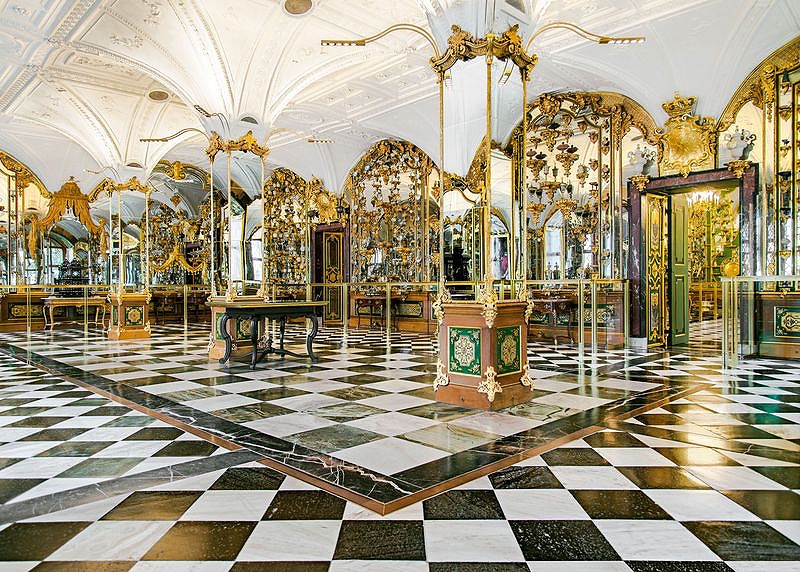
The most brilliant era of artistic achievement in Dresden opened in 1694, the year in which Frederick Augustus I succeeded his brother as Elector.  Through extensive travel, Augustus had at first hand become well acquainted with the splendor in which great rulers live. A man of huge ambition and dynamic energy, Augustus set about transforming the electoral capital into a center of artistic and architectural excellence that would rival Versailles. Augustus converted to Catholicism as a condition of being named King of Poland; this required him to impose Catholicism upon his Protestant subjects, but they were diplomatically left without interference.  Nevertheless, a project was undertaken to develop music for Catholic church services; Zelenka had a major role in this endeavor.

Jan Dismas Zelenka (1679-1745)

Jan Dismas Zelenka (1679-1745)

From 1710 Zelenka worked as a double bass player in the Dresden court ensemble, where he gradually assumed an increasingly important role, undertaking composing duties. Then his career took him to Vienna, where he studied with Johann Joseph Fux from 1716 to 1719. Following a visit to Prague during 1721 and 1722, the industrious Zelenka composed a large body of sacred works for the Dresden chapel.

From 1725 onwards, Zelenka increasingly directed church music in the Dresden court church, deputizing for the ailing Kapellmeister Johann David Heinichen.  With the death of Heinichen in 1729, Zelenka had a perfectly reasonable anticipation of being promoted in his place. Any hopes Zelenka might have entertained that he would fill Heinichen’s post were dashed with the appointment of Johann Adolf Hasse as Kapellmeister in 1730. Zelenka largely gave up composing sacred works. His compositions were considered old-fashioned and did not appeal to the Italian-oriented Augustus II. Zelenka died in 1745, reputedly a broken and disillusioned man.

The Missa Divi Xaverii was performed at the court chapel in Dresden on December 3, 1729, on the feast day of St. Francis Xavier, a 16th-century Jesuit missionary to India and Japan. It is not known which occasion the work was intended for, but the spectacular setting of the ordinary of the Mass (without Credo), in which Zelenka showed his entire mastery and originality to best advantage, was evidently composed in great haste. His autograph score is not only very damaged, but is also very sketchy, and notated with energetic and difficult-to-read pen strokes. Despite the hurry, Zelenka experimented here, particularly in the scoring of the unusually large orchestral forces. These include the brilliance of four trumpets and the frequent dialogue of the vocal parts with concertante transverse flutes, oboes, and bassoon. The Mass dates from exactly the time when Zelenka had those futile hopes to succeed the recently deceased Heinichen as Kapellmeister. He might have also had one eye on the fact that the feast of St Francis Xavier coincided with the nameday of the crown prince’s devout wife Maria Josepha, who particularly venerated the saint.

The Mass begins with the radiant opening strains of “Kyrie eleison”; the solo quartet’s plea for mercy carries through to a shapely choral response adorned by four trumpets. In the “Gloria,” we hear a gorgeous dialogue with a violin and oboe d’amore in “Benedictus,” and a charming duet in “Domine Deus”—a pastorale featuring two bubbling flutes. The “Agnus Dei” is accompanied by delicate solo flute and pulsing strings. “Quoniam tu solus Sanctus” is a fluid quartet that seems closer to Mozart than to Bach, not least on account of its introductory ritornello juggling a trio of flutes and violas on the one hand, and a trio of oboes and bassoon on the other, while trumpets make surprisingly subtle interjections. 

The heartfelt piety of “Qui tollis peccata mundi,” the thrilling rising sequences at the climax of the “Sanctus,” and the exuberant “Dona nobis pacem” (which rounds out the Mass by revisiting some of the musical themes from the “Kyrie”) reveal the Missa Divi Xaverii as an expansive and unusually richly scored work.

The damaged autograph score had long been kept under lock and key. A performing edition was created relatively recently; passages missing because of its damaged condition have been supplemented using secondary sources or reconstructed by Václav Luks. The first performance to use the new edition took place in the summer of 2014, when it was performed at the Utrecht Early Music Festival.                                    

Sources: Earlymusic.com, Carol Talbeck, John Bawden, Baroquemusic.org, Bach-cantatas.org, Václav Luks, and, of course, Wikipedia

 –Patricia Jennerjohn

Rachmaninoff: The All-Night Vigil

PROGRAM NOTES

Sergei Vasilyevich Rachmaninoff (1873 –1943) was a Russian composer, virtuoso pianist, and conductor of the late Romantic period, whose works are among the most popular in the Romantic repertoire.

Born into a musical family, Rachmaninoff took up the piano at age four. He graduated from the Moscow Conservatory in 1892, having already composed several piano and orchestral pieces. In 1897, following the negative critical reaction to his Symphony No. 1, Rachmaninoff entered a four-year depression and composed little until successful therapy allowed him to complete his enthusiastically received Piano Concerto No. 2 in 1901. During the next sixteen years, Rachmaninoff conducted at the Bolshoi Theatre, relocated to Dresden, Germany, and toured the United States.

Following the Russian Revolution, Rachmaninoff and his family left Russia; in 1918, they settled in the United States, first in New York City. Because his main source of income was as a pianist and conductor, his time for composition was limited by demanding tour schedules: between 1918 and 1943, he completed just six works, including Rhapsody on a Theme of Paganini, Symphony No. 3, and Symphonic Dances. By 1942, his failing health led to his move to Beverly Hills, California. One month before his death from advanced melanoma, Rachmaninoff was granted American citizenship.

In Rachmaninoff's work, early influences of Tchaikovsky, Rimsky-Korsakov, Balakirev, and Mussorgsky gave way to a personal style notable for its song-like melodicism, expressiveness, and rich orchestral colors. 

The All-Night Vigilwas composed in just two weeks, in early 1915. Like all traditional Russian church music, it is a cappella; instruments are not permitted in Orthodox services. The text is in Church Slavonic, the liturgical language of the Orthodox Church.  Rachmaninoff's work is a culmination of the preceding two decades of interest in Russian sacred music, as initiated by Tchaikovsky's setting of the All-Night Vigil. The similarities between the works, such as the extensive use of traditional chants, demonstrates the extent of Tchaikovsky's influence; however, Rachmaninoff's setting is much more complex in its use of harmony, textual variety, and polyphony.

The title of the work is often mistranslated as simply Vespers. This is both literally and conceptually incorrect as applied to the entire work: only the first six of its fifteen movements set texts from the Russian Orthodox canonical hour of Vespers.  The religious service itself combines three canonical hours—Vespers, Matins, and the First Hour—into one work. It is celebrated on the eves of Sundays and of major liturgical feasts.   A full religious service, including the music, does take all night. Rachmaninoff’s setting by itself is nearly seventy-five minutes of unaccompanied singing for chorus and soloists. 

Rachmaninoff set the twelve traditional parts of the Vigil to music and added three movements of his own (Nos. 12, 13, and 14), which, in his words, he created “in a conscious counterfeit of the ritual.” He made creative use of traditional church chants, using three styles: znamenny (in Nos. 8, 9, 12, 13, and 14), a more recitational "Greek" style (numbers 2 and 15), and "Kiev" chant — a chant developed in Kiev in the 16th and 17th centuries (Nos. 4 and 5). Rachmaninoff had studied ancient chant under Stepan Smolensky, to whom he dedicated the piece. The All-Night Vigilis written for a four-part choir, complete with basso profundo. However, in many sections there is three-, five-, six-, or eight-part harmony; at one point in the seventh movement, the choir is divided into eleven parts. Movements 4 and 9 each contain a brief tenor solo, while movements 2 and 5 feature lengthy solos respectively for alto and tenor

The Vigil was first performed in March of 1915 in Moscow, as a benefit for war relief. It was performed five more times over the next month to packed audiences and critical acclaim.

Pat icon for FB.jpg

The choir opens with the invitation to prayer, No. 1, “Come, Let Us Worship.” 

No. 2, “Bless the Lord, O My Soul,” features a pure, melodic chant, alternating between the alto soloist and the chorus. Rachmaninoff uses the device of humming—not a part of the Orthodox musical tradition—to create additional texture and to give continuity to the sound.

No. 3, “Blessed Is the Man,” presents Psalm verses interspersed with triple “alleluias,” which increase in fullness and range as the movement progresses. 

No. 4, “Gladsome Light,” is an ancient hymn that “originally accompanied the entrance of the clergy into the church and the lighting of the evening lamp at sunset.” The tenors open with a serene chant, which is then interwoven first with the female voices, then with the basses, evoking the fading sun and the evening light. The final measures, with the soprano notes shimmering above the descending lines of the other three voices, suggest an eternal light shining throughout the night.

The text of No. 5, “Now Lettest Thou Thy Servant Depart,” is taken from the story of Simeon in the Gospel of Luke. Simeon had been promised by God that he would not die until he saw the Messiah. When the newborn Jesus was brought to the temple, Simeon realized who he was. He blessed God, saying, “Lord, now lettest thy servant depart in peace, according to thy word, for my eyes have seen thy salvation.” Rachmaninoff said of this movement: “My favorite number in the work. . .is the fifth canticle. . . . I should like this sung at my funeral.” This movement has gained notoriety for its ending in which the low basses must negotiate a descending scale that ends with a low B-flat (the third B-flat below middle C). When Rachmaninoff initially played this passage through to Nikolai Danilin, the choral conductor, in preparation for the first performance, he recalled that “Danilin shook his head, saying, ‘Now where on earth are we to find such basses? They are as rare as asparagus at Christmas!’ Nevertheless, he did find them. I knew the voices of my countrymen. . . .” 

 No. 6, “Rejoice, O Virgin,” is often performed as a separate piece and ranks among Rachmaninoff’s most popular compositions. 

No. 7, “Glory to God in the Highest,” is notable for the “onomatapoeic sound of bells, heard in the three-part chords of the soprano and tenor and later in the great rocking back and forth of the entire choir. . .culminating with a massive, resounding chord in which all the overtones are layered. In a liturgical context, bells would be rung at this point of the service.”

No. 8, “Praise the Name of the Lord,” features “two musical layers. . .the muscular znamenny chant sung by the altos and basses, while above it, the sopranos and tenors hover and swirl like choirs of cherubim and seraphim.” 

No. 9, “Blessed Art Thou, O Lord,” dramatically relates the story of Jesus’s crucifixion and his triumphant resurrection. The humming evokes a sense of mystery and wonder. 

No. 10, “Having Beheld the Resurrection of Christ,” alternates between the male voices and female voices, responding to each other in triumph and awe at the mystery of the resurrection.

No. 11, “My Soul Magnifies the Lord,” is Mary’s paean to God upon learning that she is to give birth to Jesus. 

No. 12, “The Great Doxology,” is the pinnacle of the Vigil. The chant begins in the altos until finally the voices come together in the powerful prayer, “Holy God, Holy Mighty, Holy Immortal, have mercy on us.”

No. 13, “Today Salvation Has Come to the World,” and No. 14, “Thou Didst Rise From the Tomb,” return to the more meditative, traditional znamenny chant melodies, expressing a reverent gratitude for Divine mercy.  

In No. 15, “To Thee, Victorious Leader” the Vigil ends with the triumphant and joyful hymn of thanks and praise to Mary, the “Theotokos” or Mother of God.


Thanks to Wikipedia and the San Francisco Choral Society for program note source material.

- Patricia Jennerjohn

Soloists for Buon Natale, Nov 30 - Dec 2

CalBach-CarolineJouArmitage-2017.jpg

Soprano Caroline Jou Armitage is dedicated to performing with the highest standard of musicianship and the most sensitive expressivity in an effort to delight and move the listener. As a soloist, her interpretations have been described as “absolutely beautiful,”and her performance of Bach’s Cantata No. 21, “Ich hatte viel bekümmernis,” with the California Bach Society was delivered with “pitch-perfect clarity and affecting intensity” (San Francisco Classical Voice). She participated in the Baroque Academy at the Amherst Early Music Festival, presented a solo harpsichord recital at the 2018 Berkeley Early Music Festival, and has performed operatic roles in Paris and the Bay Area. Caroline is currently a co-director of Tactus, a Renaissance polyphony chamber choir, and studies voice with Karen Clark and harpsichord with Tamara Loring.


Mindy+Ella+Chu,+mezzo-soprano.jpg

Mezzo-soprano Mindy Ella Chu is capturing acclaim for her interpretations of concert works from composers like Mozart, Bach, and Handel. Praised for her “expressive vigor” (San Francisco Chronicle) and “liquid ornaments and a pleasantly earthy timbre” (San Francisco Classical Voice), Chu made her international solo debut in 2015 performing John Rutter's Magnificat and Handel's Messiah in Tokyo and Osaka. In 2017, she made her Carmel Bach Festival debut as a main stage soloist where she performed Beethoven’s Symphony No. 9, Mozart’s C Minor Mass, Copland’s American Songs, and Bach’s Ascension Oratorio. Highlights of the 2018–2019 season include Francesca Caccini’s Alcina with Boston Early Music Festival’s Chamber Opera Series, a Bach Collegium San Diego debut season, Handel’s Messiah with La Jolla Symphony, and a Duruflé Requiem recording with the St. Lawrence String Quartet. Chu has performed as soloist and chorister with opera companies, ensembles on both coasts such as Apollo’s Fire, Peninsula Symphony, Voices of Ascension NYC, Yale Choral Artists, Bang on a Can All-Stars, Santa Fe Desert Chorale, Quicksilver, and has worked with conductors Steven Stubbs, Paul O’Dette, Masaaki Suzuki, David Hill, Craig Jessop, Andrew Megill, and Helmut Rilling. Chu’s discography credits include albums with American Bach Soloists and Hyperion Records. Chu received a Master in Music from Yale University in Early Music, Oratorio & Chamber Ensemble. During her time at Yale, she performed as soloist and chorister with Yale Schola Cantorum and Juilliard415 in venues around America and six different countries. Chu was heard live in performance on BBC Radio 3 in the United Kingdom and WQXR New York City. She has recorded solo vocals in Cantonese for Disneyland Hong Kong. She currently resides in Los Angeles. www.mindyellachu.com

https://static1.squarespace.com/static/5761a6bbd482e9b264715978/5baad8621905f4f1c851ce84/5baad87cc83025f0e19f11b4/1537923522404/CalBach-MarkBonney-2.jpg

Mark Bonney, tenor, is based in London and performs in the UK, the United States, and Europe. His repertoire includes major works from the high baroque and classical periods. Recent stage credits include Tamino in Mozart’s The Magic Flute, the title role in Handel’s Jephtha, Aeneas in Purcell's Dido and Aeneas, Mengone in Haydn’s Lo Speziale, and Paulino in Domenico Cimarosa’s The Secret Marriage. In concert, he particularly enjoys interpreting the Evangelist roles in Bach’s Passions. Mark also performs frequently in renowned British ensembles, including the Monteverdi Choir, the Gabrieli Consort, and Britten Sinfonia Voices.  Mark recently completed a masters in music and a graduate certificate in historical performance at the Guildhall School of Music and Drama in London. He is also an alumnus of the Berlin Opera Academy, the Franz Schubert Institut and the American Bach Soloists Academy. Mark began his musical training as a treble in the Grace Cathedral Choir of Men and Boys. He went on to study voice and political science at Stanford University and then balanced careers in international development and music for several years before specializing in vocal performance.


Buon Natale, Program Notes

Christmas in Italy

Across Italy, Natale tends to be a family-oriented holiday, a time to stay at home with loved ones. Christmas officially kicks off in Italy on December 8, the Day of the Immaculate Conception of Mary. This is when decorations go up, both on the streets and inside Italian homes, and when Christmas markets start.

The eight days before Christmas are filled with carolers singing traditional songs around the neighborhood. In Rome, southern Italy, and Sicily, one can see the the zampognari, or bagpipe players, originally shepherds who came down from the mountains to play in the market squares.

One of the most important ways of celebrating Christmas in Italy is the Nativity scene (presepio). Having cribs in the home became popular in the 16th century, and it's still popular today. Cribs are traditionally put out on the 8th December. But the figure of the baby Jesus isn't put into the crib until the evening of December 24. Decorated with lights, wreaths, and trees, these Nativity scenes are displayed in many churches and piazzas. 

The official end of the Christmas season is January 6—the Day of the Epiphany and the twelfth day of Christmas. 

We are pleased to transport you to Italy for a Christmas celebration! Our program presents, in the language of music, many of these lovely traditions.

Alessandro Scarlatti (1660–1725)

Scarlatti was born in Palermo, then part of the Kingdom of Sicily. He is generally said to have been a pupil of Giacomo Carissimi in Rome. Scarlatti's music forms an important link between the early Baroque Italian vocal styles of the 17th century, centered in Florence, Venice and Rome, and the classical school of the 18th century. Scarlatti's style, however, is more than a transitional element in Western music; he shows an almost modern understanding of the psychology of modulation and frequently makes use of changing phrase lengths.

The Magnificat Primo Tonois a setting of the famous utterance of Mary, “My soul magnifies the Lord,” for five voices and continuo.  The text settings alternate between full and rich homophonic declarations, florid solos, and contrapuntal writing for smaller ensembles, creating a great variety in texture.  Scarlatti weaves the original plainchant into the writing (at the words “deposuit potentes”) with long, sustained notes in the second soprano part.

Giovanni Luigi da Palestrina (c. 1525­–1594)

Palestrina was born in the town of Palestrina, near Rome. Documents suggest that he first visited Rome in 1537, when he is listed as a chorister at the Santa Maria Maggiore basilica. He spent most of his career in Rome. Palestrina had a lasting influence on the development of church music, and his work is considered as the culmination of Renaissance polyphony.

Palestrina came of age as a musician under the influence of the northern European style of polyphony, which owed its dominance in Italy primarily to two influential Netherlandish composers, Guillaume Dufay and Josquin des Prez, who had spent significant portions of their careers there. Contemporary analysis highlights the modern qualities in the compositions of Palestrina such as color and sonority, use of sonic grouping in large-scale setting, interest in vertical as well as horizontal organization, and attention to text setting. 

Hodie Christus natus est(Today Christ is born) is a double choir (SSAB+ATTB) motet from Palestrina’s third volume of motets, published in Venice in 1575. It is based on the text of the Magnificat antiphon for the Second Vespers on Christmas Day. This motet exploits the possibilities of effective contrast: by using the differing sonorities of a high choir and a low choir; by setting off slow-moving passages expressing the solemnity of the celebration of Christ’s birth against rapid antiphonal exchanges of joyful cries of “noe, noe”; by using running passages to reflect the rejoicing of the angels; and by reserving until the concluding section of the motet the use of triple time for the final exchanges of “noe.”

Claudio Merulo (1533–1604)

Merulo was an Italian composer, publisher, and organist of the late Renaissance period, who is most famous for his innovative keyboard music and his ensemble music composed in the Venetian polychoral style. He was born in Correggio and died in Parma. Born Claudio Merlotti, he Latinized his surname when he became famous in Venice.

Merulo’s keyboard music was hugely influential, and his ideas can be seen in the music of Sweelinck, Frescobaldi and others; because of the immense influence of Sweelinck as a teacher, much of the virtuoso keyboard technique of the north German organ school, culminating in Johann Sebastian Bach, can claim to be descended from the innovations of Merulo. Although the fame of his instrumental music has overshadowed much of his vocal output, Merulo wrote madrigals and motets for double choir in the manner of Andrea and Giovanni Gabrieli. 

Lux fulgebit hodie (A light will shine upon us today) is the Introit for the second Mass on Christmas Day, which is said at dawn (the first Mass, of course, being Midnight Mass).  A setting for seven voices, the vocal lines flow smoothly towards the triumphant “Et vocabitur Admirabile, Deus” (And He will be called Wonderful, God).

Giuseppe Fortunino Francesco Verdi (1813­–1901) 

Verdi came to dominate the Italian opera scene after the era of Bellini, Donizetti, and Rossini, whose works significantly influenced him. By his thirties, he had become one of the pre-eminent opera composers in history.

The earliest of the Quattro pezzi sacri (Four Sacred Pieces) in terms of its composition date is what came to be known as Laudi alla Vergine Maria(although Verdi himself did not give it that title). It was composed between 1886 and 1888, during which time he was also working on his penultimate opera, Otello, which premiered in 1887.  Set for four female voices, it is based on a short prayer from Canto XXXIII of Dantes's Paradiso,the third part of his DivinaCommedia. Verdi alludes to the counterpoint of Renaissance music. Each stanza is introduced by a new motif. Biographer Budden describes the piece as "with the subtlest of harmonic and rhythmic inflexions, unashamedly modern in character.”

Giovanni Croce (1557–1609)

Croce was an Italian composer of the Venetian School in the late Renaissance. He was particularly prominent as a madrigalist. Stylistically, Croce was more influenced by Andrea Gabrieli than his nephew Giovanni; Croce preferred the emotional coolness, the Palestrina clarity and the generally lighter character of Andrea's music. Croce’s sacred music shows a development from the even-textured style of Palestrina to the more modern Venetian style of his day.  

Quaeramus cum pastoribus, a double choir motet for Christmastide, features “call and response” writing, but it does not adhere fully to that Venetian style, as sometimes a question and answer alternate between the two choirs (the typical Venetian treatment), and at other times each choir asks and answers the questions by itself.  The two choirs separate and join together, creating varied textures and sonorities. Sections of the motet are separated by the traditional “noe, noe” Christmas response.

Bepi (Guiseppe) De Marzi (b. 1935)

Giuseppe De Marzi, known as Bepi, was born in Arzignano in the Valle del Chiampo in 1935, where he lived until 2015, when he moved to Vicenza. He was a music educator, and a teacher of organ and organ composition at the Canneti Municipal Institute of Vicenza; he also taught in the diocesan seminary of Vicenza.  De Marzi has published much instructional music for nursery and primary school, as well as songs for baptisms, confirmations, and marriages.

In Pastori, a gently rocking rhythm paints a picture of the humble birth of Jesus, describing the first lullaby (“ninnananna”) sung to him by the shepherds.

Traditional Christmas Carols

Tu scendi dalle stelle(You come down from the stars) is perhaps the best-known Italian Christmas carol. It was originally written in 1732 in Naples by Saint Alphonsus Liguori in the musical style of a pastorale. Though found in numerous arrangements and commonly sung, it is traditionally associated with the zampogna, or large-format Italian bagpipe.

Gesù bambin l'è nato in tanta povertà (The Infant Jesus is born in such poverty) is a traditional carol from the Canavese area, in the province of Turin. This song, with some textual and melodic variations, is popular throughout northern Italy.

Ottorino Respighi (1879–1936)

Respighi was born Bologna, Italy, into a musical family. His father, a local piano teacher, encouraged his son's musical inclinations and taught him basic piano and violin at an early age. 

Respighi was an enthusiastic scholar of Italian music of the 16th, 17th and 18th centuries. His studies influenced his later compositions and led to a number of works based on early music, notably his three suites of Ancient Airs and Dancesand the suite Gli uccelli(The Birds). 

Lauda per la Natività del Signore(Laud to the Nativity), written in 1930, is a cantata for three soloists (soprano, mezzo-soprano, tenor), mixed chorus, and chamber ensemble (woodwinds and piano four-hands).  The text, written by 13th century Franciscan friar Jacopone da Todi, tells the story of the birth of Jesus from the shepherds’ perspective and utilizes the vocal soloists as the main characters: the Angel (soprano), Mary (mezzo-soprano), and the Shepherd (tenor). The pastoral mood of the piece is a perfect setting for the story, and demonstrates Respighi’s “new old music” composition style—using more modern harmonies and instrumentation in conjunction with old forms and melodies such as madrigals, plainchant, and fugues.  

—Patricia Jennerjohn